Communication is a critical determinant of project success, yet it is often underestimated and insufficiently prioritized. Despite its tendency to be overlooked, we emphasize that communication is one of the most influential factors in achieving successful project outcomes. In this insight, we explore why it is essential, who needs to be engaged, and the key principles that enable communication to be both effective and impactful.
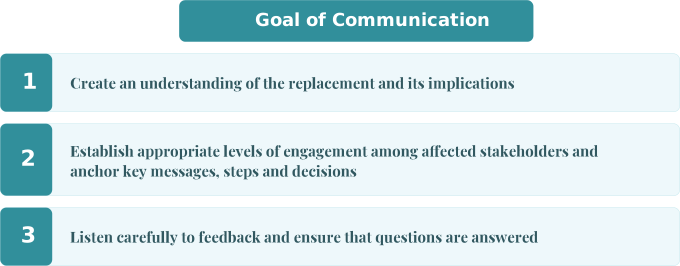
The goal of communication when driving projects
The primary goal of communication within a project is to build a shared understanding of the change or replacement being implemented, including its wider implications. This is achieved by engaging the right stakeholders at the right time and ensuring that key messages, activities, and decisions are clearly anchored.
Effective communication requires adopting the perspective of those affected by the change, considering what they may think, feel, know, or assume. This helps ensure that communication resonates and addresses the concerns and expectations of each stakeholder group.
Equally important, communication must be two‑way. Actively listening to feedback and responding to questions are essential for maintaining a transparent, coherent, and well‑functioning flow of information throughout the project lifecycle.
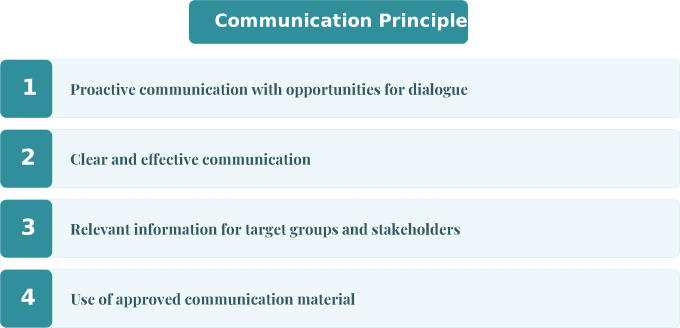
Core communication principles to ensure project success
To ensure effective communication, several key principles should be followed. First, communication should be proactive and create opportunities for dialogue. By communicating proactively, organizations reduce the risk that stakeholders must actively seek out information, which may otherwise lead to unequal access to information or, in some cases, stakeholders being overlooked entirely.
In addition, clarity and effectiveness are essential characteristics of successful communication, as they support a shared understanding and enable more efficient information exchange. Furthermore, information should be delivered through different channels and formats, adapted to the specific needs of various stakeholder groups. This requires an analysis of which communication forums and formats are most suitable for each stakeholder group, as well as considering the timing and cadence of communication. Finally, certain communication should be reviewed and approved by relevant stakeholders to ensure consistency, accuracy and a coherent message, particularly when communicating to large internal audiences or external parties.
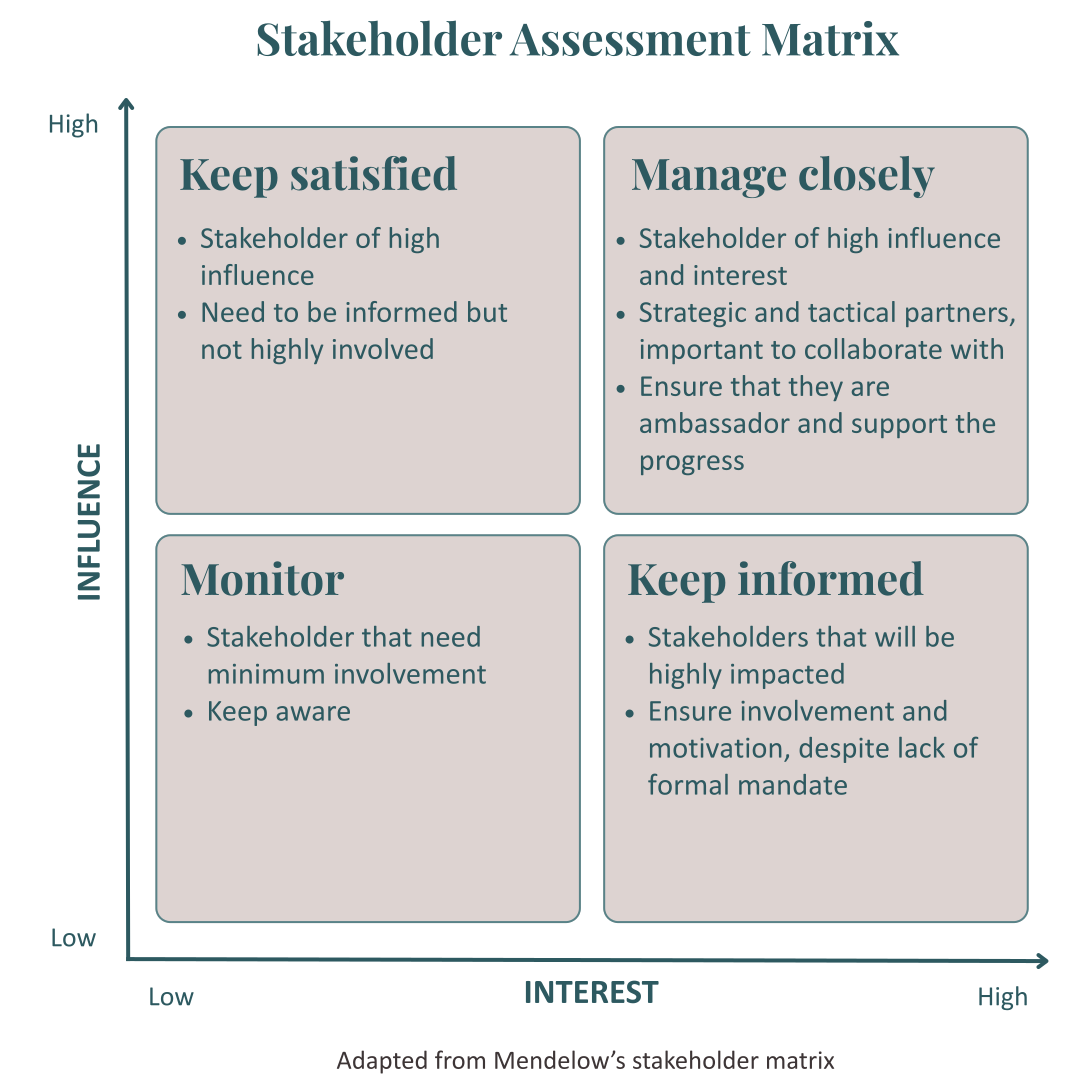
Stakeholder Assessment: The foundation of effective project communication
Identifying the right stakeholders is a powerful enabler of effective communication and a cornerstone of successful project delivery. To do this effectively, it is essential to understand what a stakeholder is and what role they play. A stakeholder may be a project team member, internal employee from different parts of the organization, or an external party who is directly or indirectly affected by the change.
Since stakeholders differ significantly in their needs and expectations, it is helpful to categorize them into distinct groups. The stakeholder assessment therefore serves as a valuable analytical tool for structuring these groups and supporting effective, targeted communication. The assessment is based on stakeholders’ levels of influence and interest, which are key determinants of how communication should be designed and tailored. It is worth noting that this assessment is not a one-time exercise, stakeholders can shift between quadrants as the project evolves, and the communication approach should be revisited and adapted accordingly.
The stakeholder assessment presented below provides a practical, efficient, and systematic approach to categorizing stakeholders.
Drawing on many years of hands-on experience, Opticos helps organizations successfully navigate complex projects across multiple areas and sectors. Strong communication is a cornerstone of our approach and is fully integrated into our daily project management and ways of working.
Below, we share an example from a recent project involving the replacement of a Master data management system within a manufacturing company. In this example, we illustrate how we identified different stakeholder groups and tailored our communication approach to their specific needs to ensure effective engagement.
Monitor
- Stakeholders: Limited influence and low interest. They require minimal involvement but should remain informed at a basic level. In our case, this includes the broader organization, in which not all individuals are directly affected.
- Communication: Broad updates shared via Townhalls, newsletters, or SharePoint without intensive engagement.
Keep satisfied
- Stakeholders: High influence but limited interest. Not heavily affected by the change but responsible for setting the strategic direction for the department where the change is taking place. In this case, this includes roles such as the CIO and the Digital Management Team.
- Communication: High level updates through presentations, summaries, and occasional one-to-one dialogues.
Keep informed
- Stakeholders: High interest but limited influence. In this project, this included roles such as end users and support teams. They are highly affected by the change but cannot influence the decisions.
- Communication: Participation in training activities and regular interactions, often cascaded through managers.
Manage closely
- Stakeholders: Both high influence and high interest. In our context, this included roles within the Steering Committee, managers, and key SMEs. They provide strategic guidance, make key decisions, and steer the direction of the change.
- Communication: Close collaboration through continuous dialogue, frequent Steering Committee meetings, joint decision making, and one-to-one dialogues when needed.
In conclusion, successful projects are not driven by well-structured plans and timelines alone, they are driven by people. By treating communication and stakeholder management as strategic enablers rather than supporting activities, organizations significantly increase their ability to deliver change that is understood, accepted, and adopted. A structured stakeholder assessment, combined with intentional communication, creates clarity, builds trust, and accelerates change. When done well, communication becomes more than information sharing, it becomes a powerful force for turning complex changes into measurable results.
At Opticos, stakeholder management is a core part of our day‑to‑day operations, not least within Tech Powered Business Transformation. Want to know more? Please check out our page here.