Bridging the strategy and execution gap
Most leadership teams are clear on where they want to go. Growth, resilience, customer promises, profitability, and long-term capability. Yet many organisations struggle to translate these choices into day-to-day decisions across sales, operations, and finance.
A common reason is fragmented planning. Different functions use different assumptions, tools, and time horizons. This creates parallel versions of the truth and leads to reactive decisions. Teams optimise locally, priorities shift late, and issues are handled when they are already urgent. Over time, this affects performance through missed opportunities, inefficient use of resources, and reduced ability to respond to change.
Sales and Operations Planning, S&OP, is one of the most practical ways to close this gap. It is often associated with balancing demand and supply, but in practice, its strongest value is broader. S&OP creates a structured management rhythm that aligns commercial, operational, and financial plans, and helps leaders make trade-offs explicit and actionable.
S&OP becomes strategic when it drives real choices
S&OP has evolved from a supply chain coordination process into a capability for running the business with clearer priorities. It creates a forum for evaluating scenarios, assessing constraints, and making decisions that hold until the next cycle.
This matters because many organisations already “do planning” but still struggle with effective execution. Forecasts exist, capacity discussions happen, and financial reviews run on schedule. But the organisation lacks a repeatable way to connect these activities into one plan that people trust and act on. S&OP fills that gap when it is designed to support decision-making and follow-through, not only reporting.
What strong Sales & Operations Planning looks like
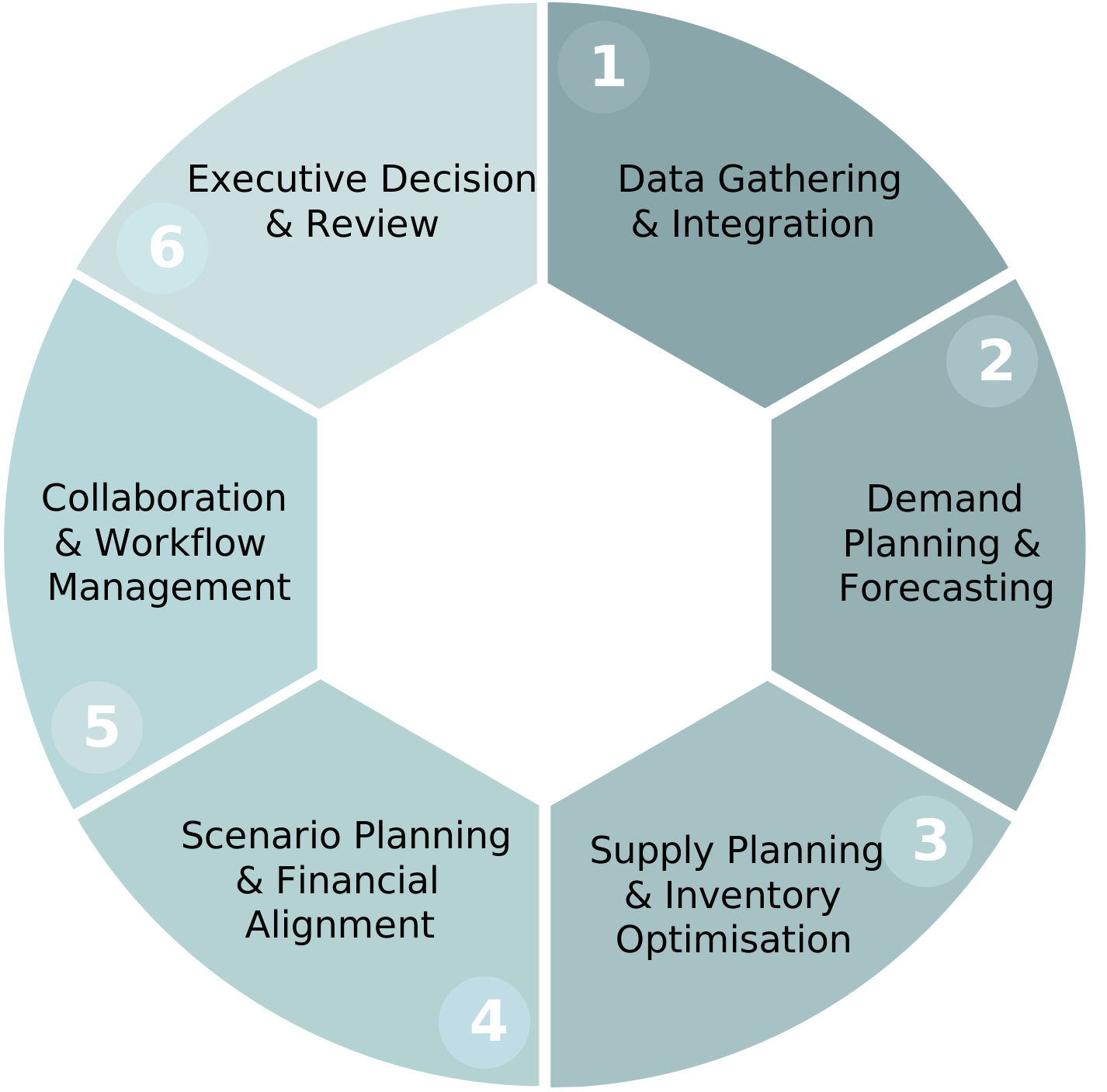
A useful S&OP setup has a clear flow from inputs to decisions. Below are six elements that are easy to recognise in organisations where S&OP works well and why the process sticks over time.
- One source of clean data
Sales, supply, and finance plans from the same numbers, the same definitions, and the same assumptions, which reduces debate and increases speed. - A demand signal people trust
A forecast baseline is improved with market insight and sales input. Assumptions and drivers are visible, so discussions focus on what is changing and why. - A feasible, cost-aware supply plan
Demand is translated into a realistic plan across capacity, materials, suppliers, and inventory. Constraints are visible early, so teams can act before delivery is at risk. - Scenarios tied to business impact
Scenario planning creates value when it supports choices. Leaders can compare options and consequences, for example service levels, cost, margin, and risk, and then decide what to prioritise. - Exceptions with owners and follow-up
The process stays effective when it focuses on the few issues that matter most. Owners are clear, actions are tracked, and decisions are connected to execution between cycles. - Executive decisions and accountability
The cycle ends with a clear decision forum. Trade-offs are made, targets are confirmed, and the plan becomes the single reference point until the next review. This is often the difference between S&OP as a slide deck and S&OP as a management tool.
If one or two of these elements are missing, the symptoms are usually familiar: slow escalations, repeated re-planning, and unclear priorities. When they are in place, S&OP becomes a steady rhythm that reduces noise and improves decisions.
Where S&OP creates the biggest impact
S&OP creates value because it links operational decisions to business outcomes. It helps organisations move from reactive coordination to proactive prioritisation.
Clearer prioritisation and faster trade-offs
S&OP provides a consistent way to evaluate how constraints affect outcomes. Leaders can prioritise customers, products, or programmes with a shared understanding of what the trade-offs are. This also improves cross-functional alignment because the why behind the plan becomes clearer, not only the what.
Agility through structured scenarios
Agility is not about changing direction every week but instead about understanding options early and acting before issues become urgent. With S&OP, scenario discussions become part of a repeatable rhythm. The organisation can test assumptions, assess risk, and decide on contingency actions with less stress and less guesswork.
A stronger link to strategic cycles
S&OP becomes more strategic when it connects to budgeting, portfolio reviews, and long-term capacity planning. Insights from S&OP, such as recurring bottlenecks or demand shifts, should influence investment choices and resource allocation. At the same time, strategic priorities should guide what the S&OP cycle focuses on.
Measurement that supports action
Traditional metrics like forecast accuracy and lead time remain important. S&OP often becomes more effective when metrics also reflect business outcomes such as service, cost, margin, and delivery reliability. The key is shared ownership across functions, so measures support decisions and follow-up, not only reporting.
Related reading: Predictable Manufacturing
Many operations leaders also work towards predictability. Stable plans, fewer surprises, steadier execution, and better resilience under stress. S&OP supports this by creating a predictable decision rhythm and clearer priorities when constraints and change are unavoidable.
To learn more about the benefits of Predicable manufacturing, read more the concept here: Predictable Manufacturing is the Foundation for Competitive and Resilient Operations
Taking the next step
The strategy execution gap is not new, but it is becoming more pressing as complexity increases. Organisations need planning that is aligned, flexible, and focused on outcomes. S&OP offers a practical way forward by creating one plan, clear trade-offs, and disciplined follow-through.
At Opticos, we help organisations strengthen S&OP in a way that fits their context. Whether you are building S&OP from scratch or strengthening an existing setup, we can support you with structure, facilitation, and practical ways of working, so you get a plan that people trust and decisions that carry into execution.